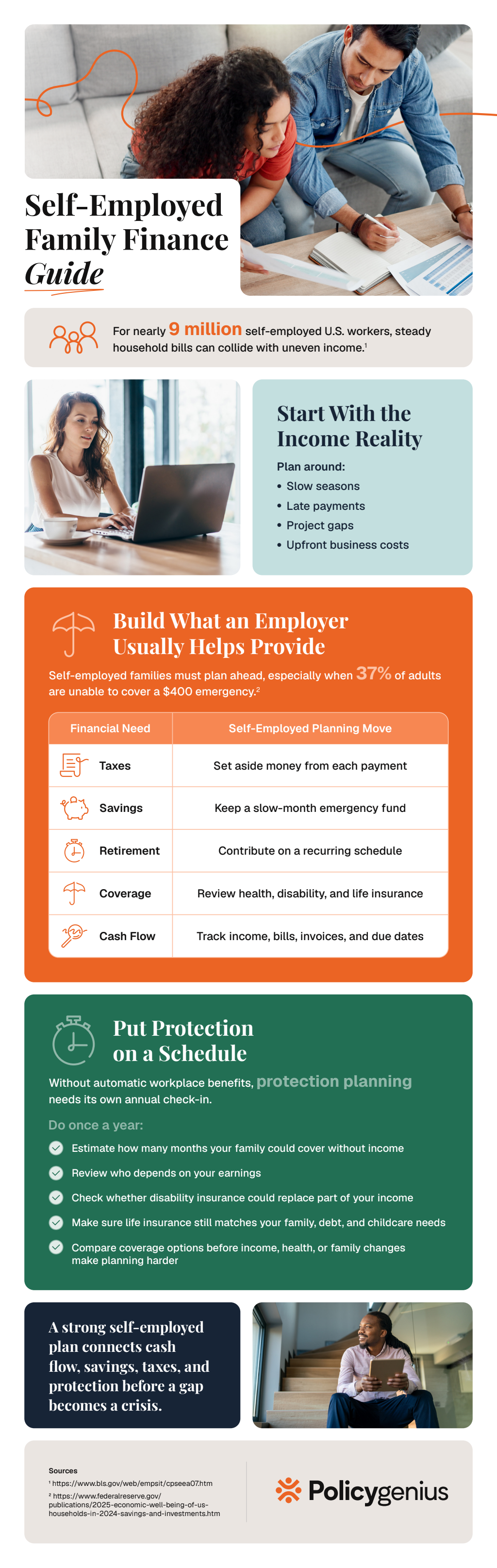
Self-employment offers a level of independence that many families value. The ability to control your schedule, build your own business, and make career decisions on your terms can be incredibly rewarding. However, with that freedom comes the responsibility of managing finances without many of the built-in systems that traditional employees often take for granted.
When there is no employer handling tax withholding, retirement contributions, or benefits administration, financial planning becomes a much more active process. For self-employed families, long-term stability often depends on creating structure, preparing for uncertainty, and maintaining clear financial priorities.
Establish a Consistent Financial Routine
Income fluctuations are common for business owners, freelancers, consultants, and independent contractors. Some months may bring strong revenue, while others may be slower than expected.
Because expenses such as housing, utilities, insurance, and groceries remain relatively consistent, it helps to develop a financial system that creates predictability. Many self-employed households benefit from establishing a routine that directs incoming revenue toward specific purposes before it is spent.
Allocating money for taxes, operating expenses, savings goals, insurance costs, and household spending creates a framework that supports both short-term needs and long-term planning.
Treat Your Household Like Its Own Business
One challenge many self-employed families face is blending personal and business finances. When income flows directly from business accounts into daily spending, it can become difficult to understand how much money is truly available.
A more structured approach involves separating business operations from household finances. Paying yourself a consistent amount each month can make budgeting easier while helping ensure the business maintains adequate reserves for future obligations.
This separation also provides a clearer picture of both business performance and household financial health.
Prepare for Expected Uncertainty
Unexpected expenses are part of life, but many financial pressures facing self-employed families are actually predictable. Tax payments, equipment upgrades, insurance renewals, licensing fees, and seasonal business fluctuations often occur on a recurring basis.
Building reserves for these expenses throughout the year can help smooth cash flow and reduce financial stress. Dedicated accounts for taxes and savings can make it easier to avoid using money intended for future obligations.
Planning ahead transforms many financial surprises into manageable events.
Make Future Goals Part of Today’s Plan
Without automatic retirement plans or employer contributions, it can be easy to focus entirely on immediate financial needs. However, long-term goals deserve attention as well.
Retirement savings, children’s education, home purchases, and business growth initiatives all require deliberate planning. Setting aside money regularly, even in modest amounts, can create meaningful progress over time.
The most effective financial systems treat future goals as ongoing priorities rather than occasional considerations.
Protect Your Ability to Earn
For many self-employed families, the business owner is the primary source of household income. This reality makes risk management especially important.
Emergency savings provide valuable protection during temporary setbacks, but larger risks often require additional safeguards. Disability insurance can help replace income if health issues prevent someone from working, while life insurance can provide financial security for loved ones if the unexpected occurs.
These protections help ensure that a family’s financial future does not depend entirely on uninterrupted earning ability.
Reevaluate as Circumstances Change
A financial plan should evolve alongside the family it supports. Major life events often create new priorities and responsibilities that deserve attention.
Marriage, children, homeownership, business expansion, increased income, or new debt obligations can all affect financial needs. Reviewing savings strategies, insurance coverage, and financial goals on a regular basis helps ensure plans remain aligned with current circumstances.
Small adjustments made proactively are often easier than large corrections made later.
Building Confidence Through Planning
Financial stability for self-employed families is not necessarily about earning the highest income. More often, it comes from having systems that bring clarity, discipline, and flexibility to financial decisions.
By creating predictable processes, maintaining appropriate reserves, protecting against risk, and planning for the future, self-employed households can build a strong financial foundation. With the right structure in place, families can enjoy the advantages of self-employment while feeling more confident about their long-term financial security.
For a closer look at building a family finance plan around self-employed income, explore the accompanying resource.