Sustainable construction is rapidly moving from an optional upgrade to an industry expectation. As environmental concerns grow and resources become more limited, builders and developers are rethinking longstanding practices. Every phase of a project, from early site work to final material selection, now carries an opportunity to reduce impact and improve long-term performance. This shift reflects both rising regulatory demands and a broader commitment to building in ways that support a healthier future.
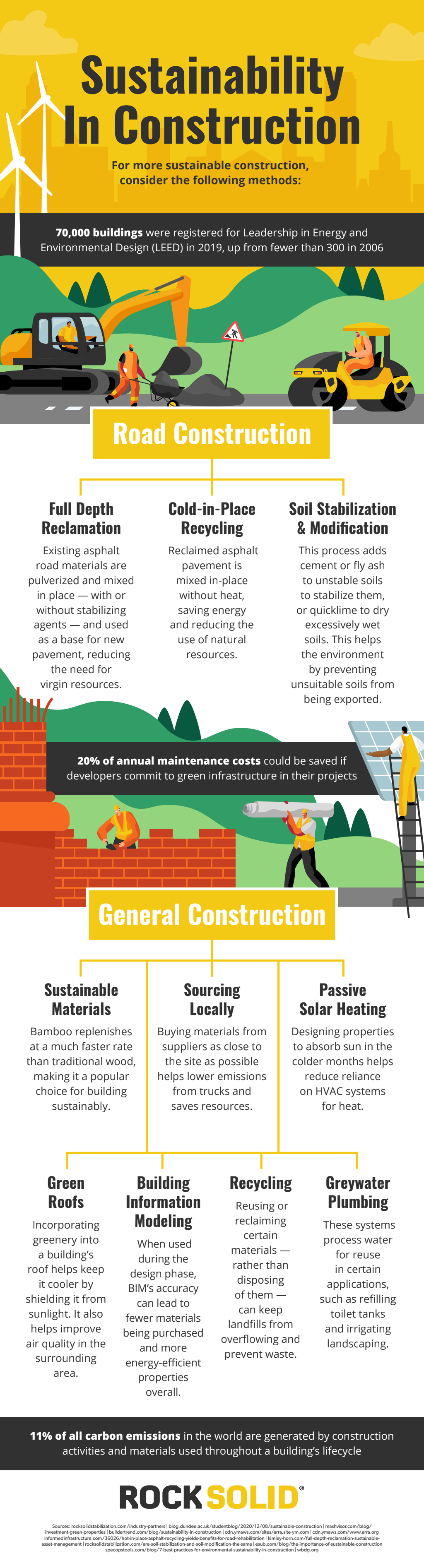
Construction plays a major role in global emissions, contributing roughly 11 percent of worldwide totals through material production, transportation, and on-site activity. With numbers like these, the industry is taking a hard look at how infrastructure can be built more responsibly. New strategies allow teams to cut waste, reuse existing materials, and design structures that perform efficiently for decades.
Site preparation is a key area of innovation. Road and infrastructure projects benefit from methods like full depth reclamation, where existing pavement is asphalt pulverized and reused on-site as a stable foundation. This approach keeps large quantities of material out of landfills and reduces the need for hauling replacement loads. Cold-in-Place Recycling is another practical solution that restores road surfaces without applying heat, lowering fuel consumption and emissions at the same time. Soil stabilization and modification add even more flexibility, allowing crews to strengthen or improve native soils with additives rather than importing new fill.
Sustainable thinking also applies to building materials. Fast-growing renewable resources such as bamboo offer strength comparable to traditional lumber with a fraction of the environmental footprint. Choosing locally sourced materials limits transportation demands and supports nearby suppliers. Many modern designs now incorporate green roofs, which improve insulation and absorb stormwater, and passive solar concepts that use building orientation and layout to naturally regulate temperature.
Digital tools like Building Information Modeling (BIM) have become essential for reducing waste. By mapping out a project in detail before construction begins, teams can make more accurate material estimates, detect conflicts early, and streamline installation. This leads to fewer errors and a more efficient use of resources throughout the building’s lifecycle.
Water and waste reduction are also becoming central priorities. Greywater systems give buildings the ability to reuse water for irrigation and other non-potable needs, while on-site recycling helps prevent materials such as concrete, metals, and timber from going to waste. These practices not only reduce environmental impact but also cut costs by minimizing the purchase of new materials.
One of the strongest arguments for sustainable construction is financial longevity. Green infrastructure often requires less upkeep and delivers meaningful savings over time. In many cases, maintenance costs can drop by up to 20 percent. With demand for environmentally responsible development increasing, more projects are pursuing certifications like LEED, reflecting a clear market shift toward energy-efficient and resource-conscious buildings.
Sustainability is now part of construction’s evolution. Through smarter site work, thoughtful material choices, and efficient design, today’s building practices are laying the foundation for a more resilient and responsible future. As interest grows and technology advances, each project becomes an opportunity to build in ways that serve both people and the planet.