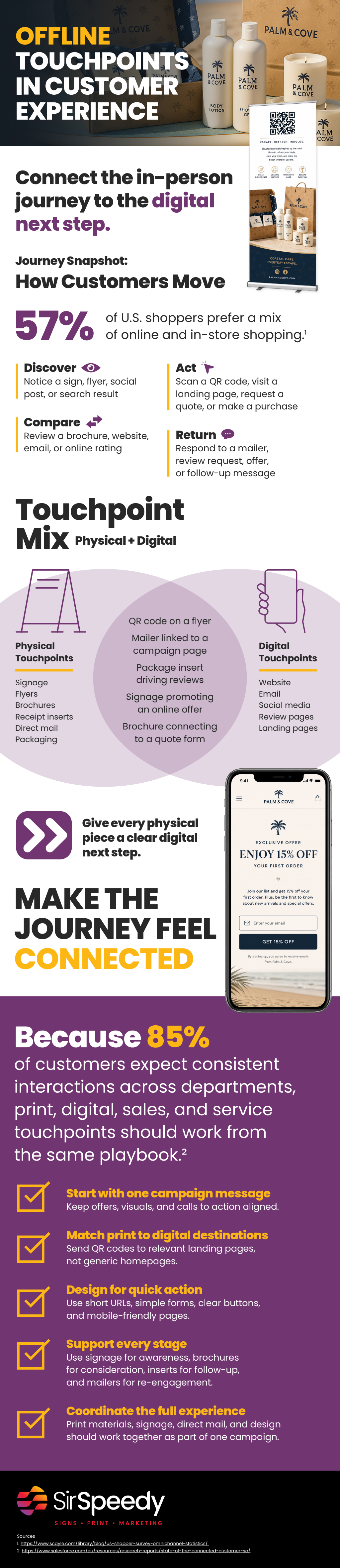
Offline touchpoints help customers notice, understand, and act. They shape how customers judge a business before a conversation starts, while a purchase is happening, and after the initial interaction ends. A sign that is hard to read, a brochure with outdated details, or a package insert with no clear next step can create friction that digital marketing alone cannot fix.
Every printed piece should have a clear job. It should guide, confirm, remind, explain, or prompt action. For retailers, that may mean window graphics that make an offer easy to understand from the sidewalk. For professional service firms, it may mean leave-behind materials that help a prospect compare options after a meeting. For franchises, it may mean location-level signage and printed materials that stay consistent while still allowing room for local offers.
The most effective offline touchpoints are built with a clear purpose. A flyer should not try to say everything. A receipt insert should not feel like an afterthought. A mailer should give the recipient a reason to act and a simple way to do it. When each piece has one role, customers can move through the experience with less confusion.
Build Offline Materials Around Customer Questions
Good offline marketing starts with the questions customers are likely asking in the moment.
At the discovery stage, they may be asking, “Is this relevant to me?” Signage, posters, postcards, and flyers need to communicate quickly. The offer, benefit, or reason to engage should be visible right away.
At the consideration stage, customers need confidence. Brochures, sell sheets, menus, catalogs, and service guides should make comparison easier. Clear headings, simple pricing cues, strong visuals, and direct next steps help customers understand what to do next without searching for answers.
At the purchase or follow-up stage, printed materials can reinforce the decision. Packaging, inserts, thank-you cards, appointment reminders, and loyalty offers can extend the experience beyond the transaction. This is where small details matter. A clear review prompt, care instruction, reorder reminder, or referral offer can keep the relationship active.
Make the Physical Piece Worth Keeping
Not every printed piece needs to be permanent, but it should feel useful enough to hold attention. Customers are more likely to keep materials that help them solve a problem, remember a deadline, compare choices, redeem an offer, or contact the business later.
Good design helps customers feel confident. Consistent colors, polished layouts, readable type, and accurate information send a message about how the business operates. A rushed or mismatched piece can make the customer wonder whether the experience behind it is just as uneven.
Offline touchpoints work best when they are planned as part of the larger campaign from the start. The message, design, offer, and next step should be clear before anything goes to print. That planning helps every sign, mailer, brochure, insert, and package support the same customer experience.
For more ways to connect physical materials with the customer journey, view the accompanying resource from Sir Speedy, a provider of custom signage solutions.